Water treatment is the single most important factor in keeping industrial cooling towers safe, reliable, and cost-effective. When water chemistry is ignored or poorly managed, the result is predictable: scaling, corrosion, fouling, uncontrolled bacterial growth, and a dramatically higher risk of Legionella or other pathogens. These issues can compromise heat transfer, trigger compliance problems, and create unplanned shutdowns or costly repairs.
With experience spanning the USA, Mexico, and Latin America,
Thermal Flow delivers water treatment solutions engineered for the complex realities faced by facility managers and process engineers. Our approach combines hands-on diagnostics, advanced
cooling tower design practices, and leading chemical programs designed specifically for your unique water conditions and duty cycles.
What is cooling tower water treatment and why does it matter?
Cooling tower water treatment involves the application of physical, chemical, and biological processes to ensure your tower water stays within precise quality limits. Proper water treatment prevents mineral scaling, corrosion of metal surfaces, biological fouling, and most critically, reduces Legionella and pathogen risk.
Any
industrial cooling tower whether packaged,
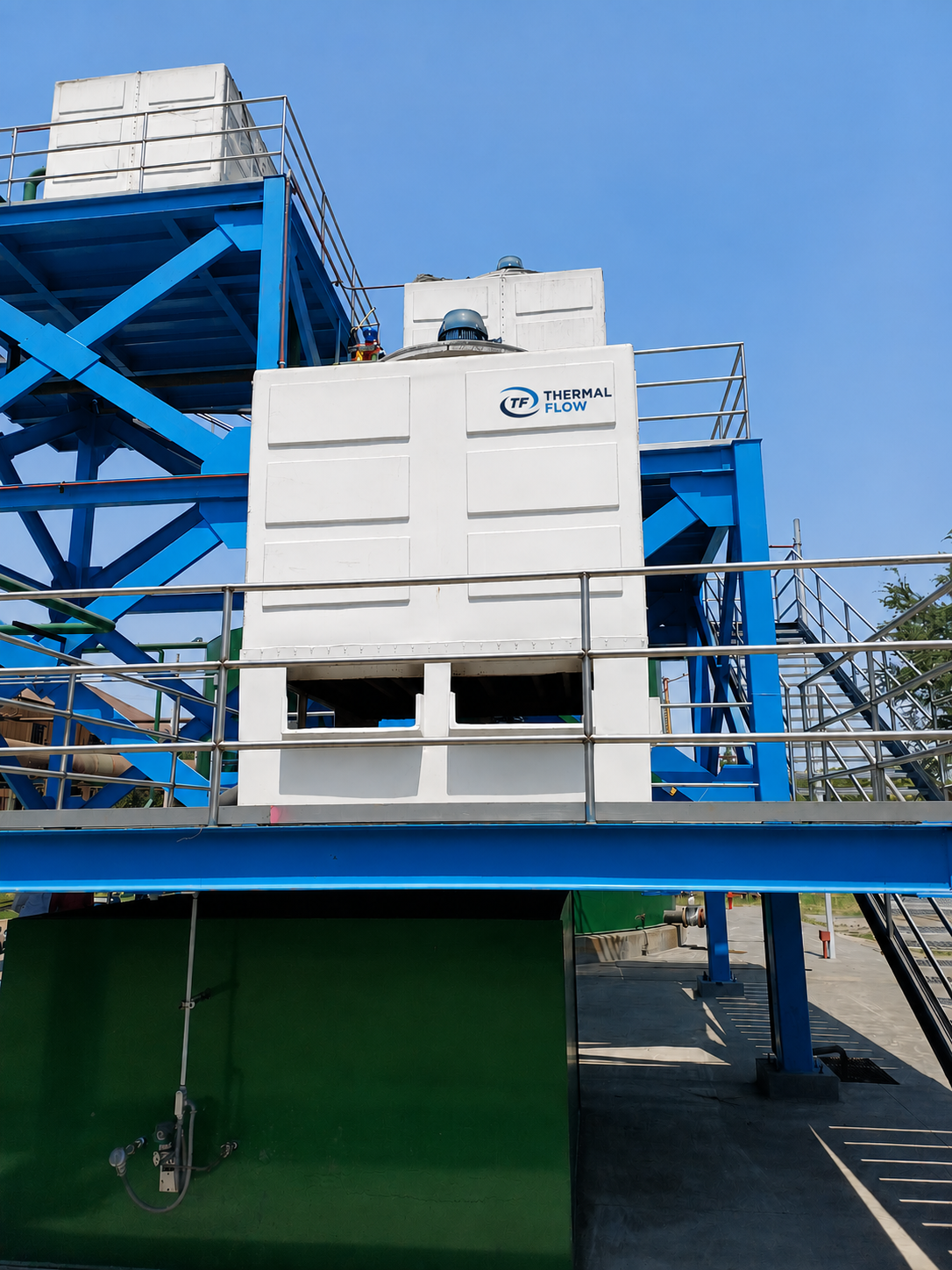
field erected cooling tower , or part of a
cooling tower rental fleet, depends entirely on stable, healthy water.
The dangers: Legionella, scale, corrosion and fouling
The biggest water-side risks include:
- Legionella: Poorly managed water creates the ideal environment for Legionella bacteria, which can be deadly in outbreaks and triggers legal exposure and regulatory audits.
- Scaling: Precipitation of calcium, magnesium, silica, and iron minerals as water evaporates. Scaling blocks heat transfer and increases operating cost.
- Corrosion: Caused by oxygen, pH swings, or poor metallurgy control, leading to leaks, structural loss and expensive rebuilding.
- Fouling: Accumulation of debris, process contamination, algae, and biofilms that disrupt water flow and promote pathogen growth.
These problems attack every type of
cooling tower manufacturer design but can be mitigated and controlled with a balanced treatment program.
How does a cooling tower water treatment program work?
A well-engineered program begins with a full water chemistry analysis and a survey of system operating conditions. Chemical treatment usually includes:
- Scale inhibitors (phosphonates, polymers, chelants)
- Corrosion inhibitors (anodic/cathodic, film-forming agents, molybdate, zinc)
- Biocides for microbial and algae control (oxidizing and non-oxidizing, automated dosing)
- Pre-filtering, side-stream filtration, and blowdown control
- Automated measurement and adjustment via controllers and water quality monitoring
In severe or variable process environments, the most reliable results are achieved by integrating treatment with the original
cooling tower design and ongoing
cooling tower maintenance routines.
Legionella prevention: critical steps for safe operation
Any open evaporative system represents a genuine Legionella risk if neglected. Safety best practices include:
- Routine testing for culturable Legionella and total bacteria counts
- Maintaining appropriate biocide residuals at all times
- Frequent cleaning and inspection of basins, nozzles, fill, and drift eliminators
- Documented water treatment logs and corrective action tracking
- Operator and contractor training on Legionella response and hazard reporting
For many plants, especially those running a
field erected cooling tower or managing a varied
cooling tower rental fleet, outside water treatment audits are recommended yearly or after major upsets.
How to troubleshoot cooling tower water treatment issues
If heat transfer drops, visible scaling or corrosion appears, or microfouling/biofilm cannot be controlled, start with these checks:
- Validate cycles of concentration and blowdown/bleed settings
- Check dosing equipment calibration and actual chemical residuals versus setpoints
- Review last full chemistry report and adjust for environmental or supply changes
- Flush and clean any blocked fill, nozzles, or basin
- Escalate to a technical site survey if root cause is unclear or persists
Persistent water-side issues in your
industrial cooling tower signal the need to review both chemical selection and mechanical integration. If your tower performance is affected by system size, physical layout, or design, see our Cooling Tower Selection Guide: How to Choose the Right System for upgrade guidance.
Best practices and regulatory compliance for cooling tower water treatment
Every facility is responsible not only for health and efficiency, but also for compliance with local, regional, and international water safety standards. Best practices include:
- Digital or physical daily logs and monthly summary sheets for treatment actions and test results
- Up-to-date written protocols for chemical handling, operator training, and emergency pathogen response
- Annual review of program effectiveness and full technical audit for high-risk facilities
- Coordination of treatment schedule with all planned
cooling tower maintenance or system shutdowns
Plant managers working with advanced systems, process cooling, or regulated applications should align their program with published guidance from ASHRAE, CTI, OSHA, and their local regulatory body.
The link between water treatment and cooling tower performance
Experience shows that proactive cooling tower water treatment is the #1 driver of lifecycle performance and risk reduction. It extends asset service life, gains operational flexibility, enables compliance, supports energy savings, and lowers the probability of a major shutdown or replacement event.
Whether you operate a legacy
industrial cooling tower , manage a large
cooling tower rental fleet, or design new installations with OEM factory partners, robust treatment is essential.
Before expanding, retrofitting, or changing your system, consult Cooling Tower Selection Guide: How to Choose the Right System for the strategic overview on physical, chemical, and operational alignment.
Get proven solutions for cooling tower water treatment
Safeguard your operations and compliance with expert
cooling tower water treatment from Thermal
Flow. Our team supports advanced water management for every environment in the USA, Mexico, and Latin America. Maximize safety, reliability, and efficiency with a full-service program built for your industrial process.