Maximum process performance and energy savings start with the right approach to heat rejection. At Thermal
Flow, we understand that every plant depends on precise, reliable temperature control for critical processes. As a leading
cooling tower manufacturer, we support industrial teams in the USA, Latin America, and beyond, delivering technical clarity and measurable results for any industrial cooling challenge.
This guide explains how the evaporative cooling tower became the industry benchmark for efficiency, and offers clear guidance on how to match this technology to your business goals.
What is an evaporative cooling tower
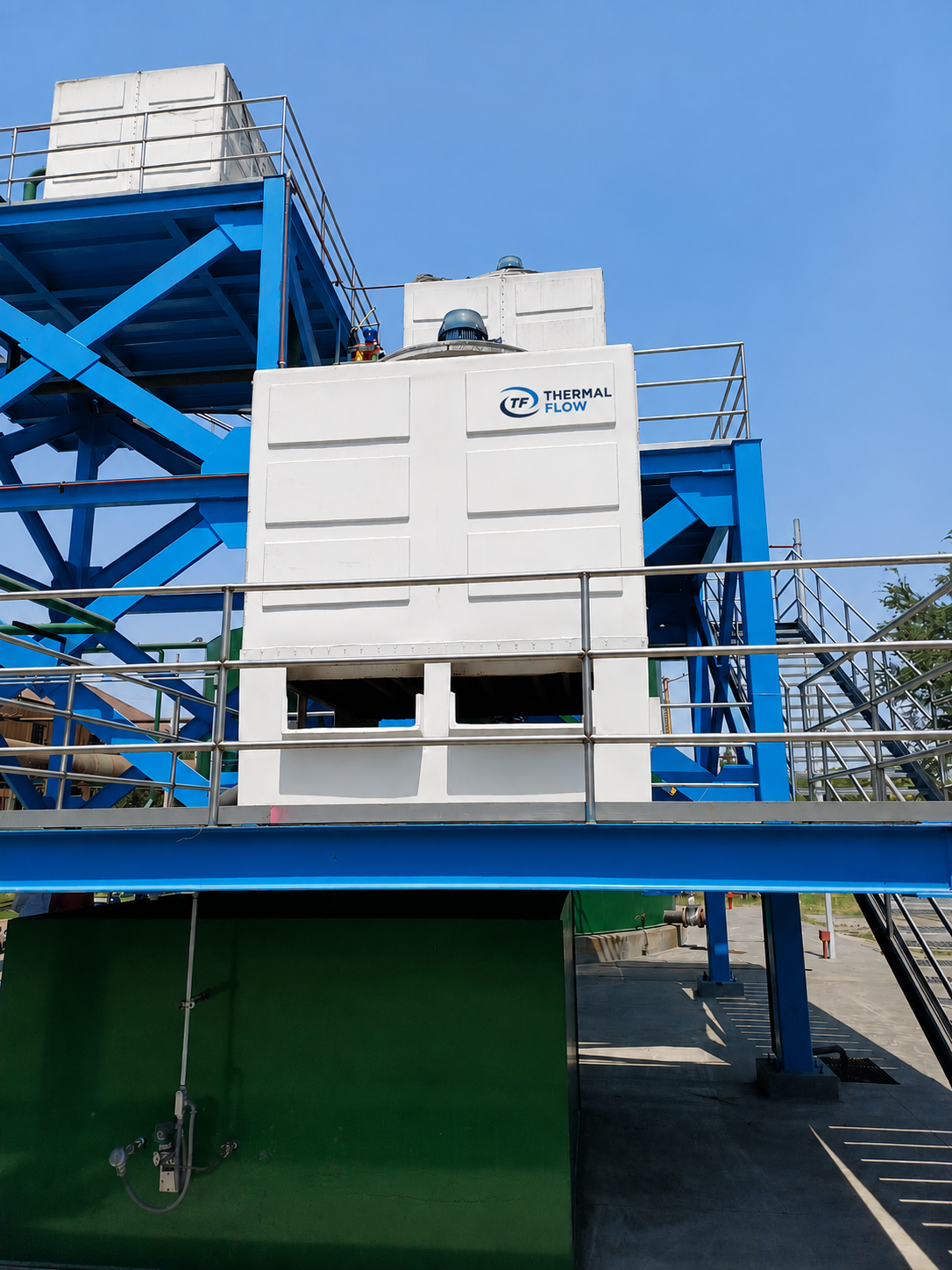
An evaporative cooling tower is a specialized thermal device used to remove excess heat from industrial water streams. The core function is to take hot process water, bring it into contact with a stream of air, and transfer heat through evaporation. The reduction in water temperature is essential for safe, reliable equipment operation in sectors as diverse as chemicals, power generation, food and beverage, and general manufacturing.
How does an evaporative cooling tower work
In every evaporative cooling tower, hot water from plant operations is routed to the top of the tower and evenly distributed into the fill section. As water falls downward by gravity, ambient air is drawn or forced through the tower, moving across the fill in close contact with the water. A small percentage of the water evaporates, absorbing energy from the bulk liquid, which results in rapid cooling. The cooled water collects at the base of the tower and is pumped back into the process loop. This process keeps steady-state temperatures under control, even in high-load or 24/7 production environments.
Benefits of evaporative cooling towers for industrial use
The dominant advantage of the evaporative cooling tower is its unmatched energy efficiency. By leveraging the natural properties of evaporation, these towers can reject large amounts of heat with minimal auxiliary power. Compared to air-cooled or dry systems, evaporative designs offer lower operating costs and smaller carbon footprints for every megawatt of process heat extracted. Performance, however, depends on sound engineering and well-matched components, as explored in
Essential Cooling Tower Components: A Complete Technical Guide, where you will find practical detail on fans, fill, drift eliminators, basins, and control systems.
How do evaporative cooling towers drive energy savings
At the heart of every evaporative cooling tower is a basic thermodynamic reality: water loses heat much faster through evaporation than through conduction alone. As a result, plants can maintain cooler process water temperatures using less fan energy, less pump power, and smaller overall system footprints. In warm or humid climates, the energy advantages grow even greater, since wet-bulb temperature drives true system savings for every cooling cycle.
Main industrial applications for evaporative cooling towers
Evaporative cooling towers are found in:
- Power generation, electrical utilities, cogeneration
- Petrochemicals and heavy chemical process plants
- Metals manufacturing and steel mills
- Food, beverage, and large-scale agribusinesses
- Automotive and high-volume industrial manufacturing
- Chilled water and district cooling for major buildings, data centers, and hospitals
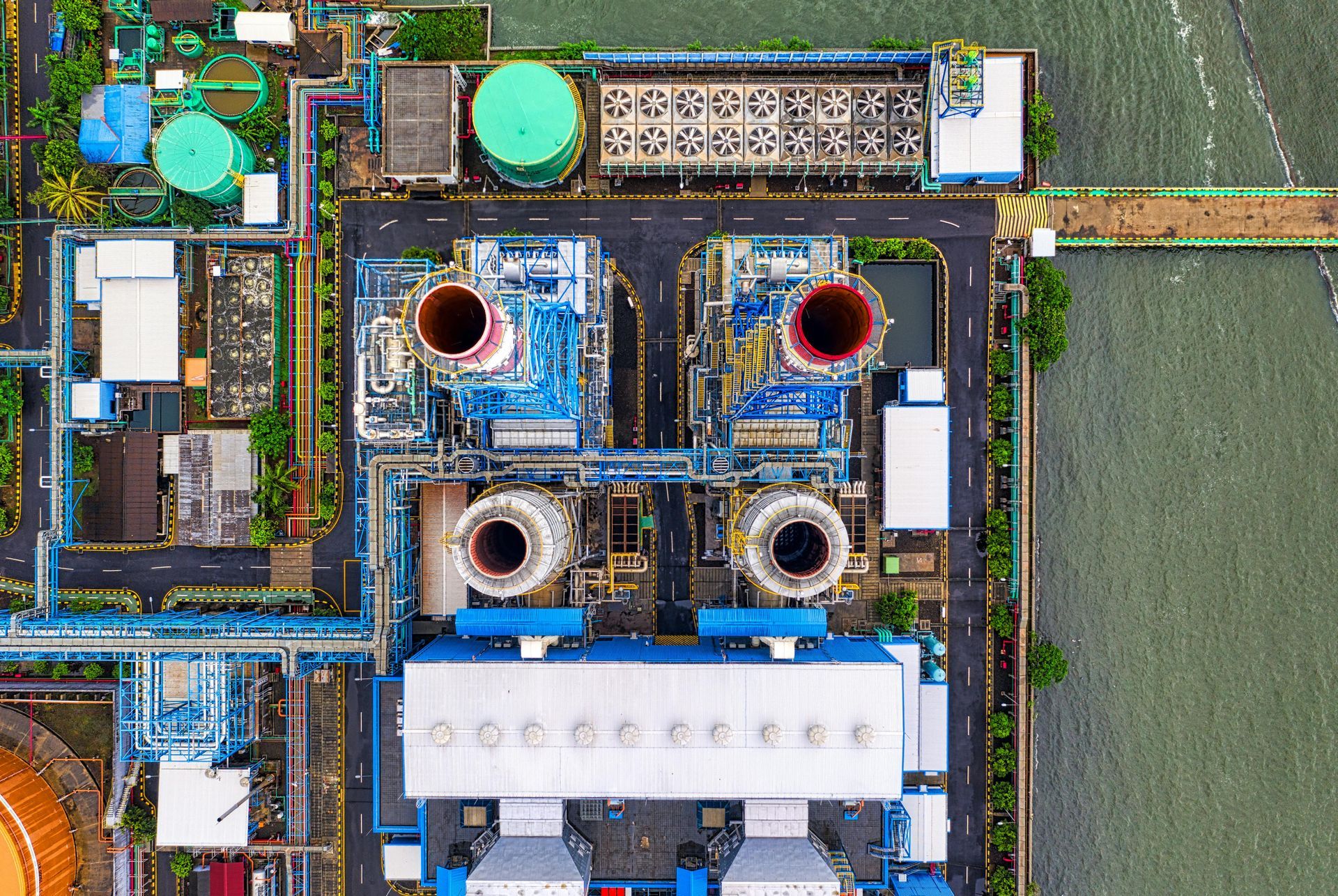
Because evaporative cooling towers offer scalable capacity and efficiency, they serve as the backbone of thermal management systems across industries with large or variable process heat loads.
Difference between evaporative cooling towers and other systems
Evaporative cooling towers use the natural process of water evaporation to achieve superior heat removal. This is fundamentally different from dry coolers or air-cooled exchangers, which rely solely on air convection, and from closed-circuit systems where water stays inside a sealed loop. While dry systems may offer certain advantages in remote or arid locations, only the evaporative cooling tower consistently reaches the lower water temperatures required for continuous, cost-effective plant operations in most industrial scenarios.
How efficient are evaporative cooling towers in process environments
Efficiency ultimately depends on site climate, process load, tower design, and regular maintenance. When properly engineered and maintained, the evaporative cooling tower routinely delivers approach temperatures within three to five degrees Fahrenheit of ambient wet-bulb, with cycle efficiency well above comparable dry or hybrid systems. Plants operating in hot, humid environments see especially large savings due to the tower's ability to maintain cooling under heavy demand.
Are there disadvantages or limits for evaporative cooling towers
As with any high-performance industrial solution, evaporative cooling towers require careful attention to water quality, air contaminants, and environmental regulations. Sites in extremely arid, dusty, or corrosive locations may face higher maintenance costs, and in some cases, dry or closed-circuit alternatives might be evaluated. Still, for most facilities, the operating and capital benefits outweigh these risk factors.
Maintenance essentials for evaporative cooling towers
Consistent tower output is only possible with scheduled maintenance. Teams must clean fill media, basin surfaces, and drift eliminators regularly, test and treat water to avoid scaling or biofilm, and inspect fans and drive components for mechanical wear. Following best practices as recommended by specialists in
industrial cooling tower service can extend effective system life and keep critical loads safe, year after year.
Why does water quality matter in every evaporative cooling tower
Water chemistry directly impacts efficiency, equipment lifespan, and site safety. Poor water quality speeds corrosion, scale, and fouling in critical zones, leading to forced outages, energy waste, and expensive downtime. Industrial users must treat process water with correct dosing, monitoring, and filtration to preserve the thermal performance that is the hallmark of evaporative cooling towers.
Environmental considerations and regulatory realities
Regulations around water usage, drift, and chemical additives are increasing worldwide. Modern evaporative cooling tower designs now feature advanced drift eliminators, water-saving automation, and eco-friendly treatment chemistries. Keeping up with environmental standards not only ensures compliance for your facility, but also protects long-term operations and brand reputation.
When to upgrade or replace your evaporative cooling tower
Consider a retrofit or replacement if your current system shows chronic performance decline, increased energy use, or persistent water quality challenges. Rising compliance requirements or plans to expand plant throughput are also clear signals to evaluate an upgrade with a specialist in
industrial cooling tower projects. Proper assessment can unlock new energy savings and process gains with a rapid and measurable return on investment.
Request a technical evaluation for your next industrial cooling tower
Industrial cooling success starts with clear insight, proven design, and performance you can measure year after year. If your operation depends on reliability and energy savings, request a full thermal audit or a new system recommendation tailored to your next
industrial cooling tower investment.