Uncontrolled heat is the number one threat to data center reliability. As computing power and rack densities continue to climb, traditional air and DX-based cooling methods are reaching their thermodynamic and economic limits. In the world of mission-critical server rooms and hyperscale campuses, owners and facility managers must adopt solutions that assure uptime, lower power consumption, and adapt easily to growth or architectural change.
As a regional authority on engineered water systems,
Thermal Flow designs and delivers cooling solutions built around advanced
cooling tower design and modern
industrial cooling tower platforms. In partnership with leading data center operators across the USA, Mexico, and Latin America, we demonstrate daily why cooling towers are setting the new standard for efficiency and operational flexibility in high-availability IT environments.
Why cooling towers are ideal for data center cooling
Unlike closed-loop air or refrigerant systems, open-circuit
cooling tower technology provides consistent, large-scale heat rejection with remarkable efficiency. Towers work by evaporating a small portion of process water to eliminate massive BTU loads generated by modern computing clusters. This approach delivers ultra-reliable water temperatures with a lower total PUE and reduced risk of capacity shortfall during peak demand.
Data centers benefit most from towers when paired with modular chiller systems, plate heat exchangers, and rigorous
cooling tower maintenance . Water towers can be scaled up or out as load demands grow, and they can be optimized for climate, redundancy, and equipment lifecycle costs.
Efficiency and energy savings for mission-critical environments
Today’s hyperscale and colocation operators face relentless cost pressure from energy use and sustainability targets.
Cooling tower solutions shine with industry-leading energy efficiency, consistently outperforming conventional air-cooled chillers and rooftop units in climates with moderate humidity.
- Achieve lower approach temperatures for better thermal management at the rack level
- Reduce fan and compressor power demand at partial loads
- Operate with lower water consumption thanks to advanced fill design and automation
- Flexibly integrate with economizer cooling modes or partial chillers for lowest total cost
For a deeper dive on energy reduction, explore
How to Improve Cooling Tower Efficiency and Reduce Operating Costs for proven optimization strategies.
Scalability and modular deployment
Whether you build a new hyperscale campus or retrofit an edge site,
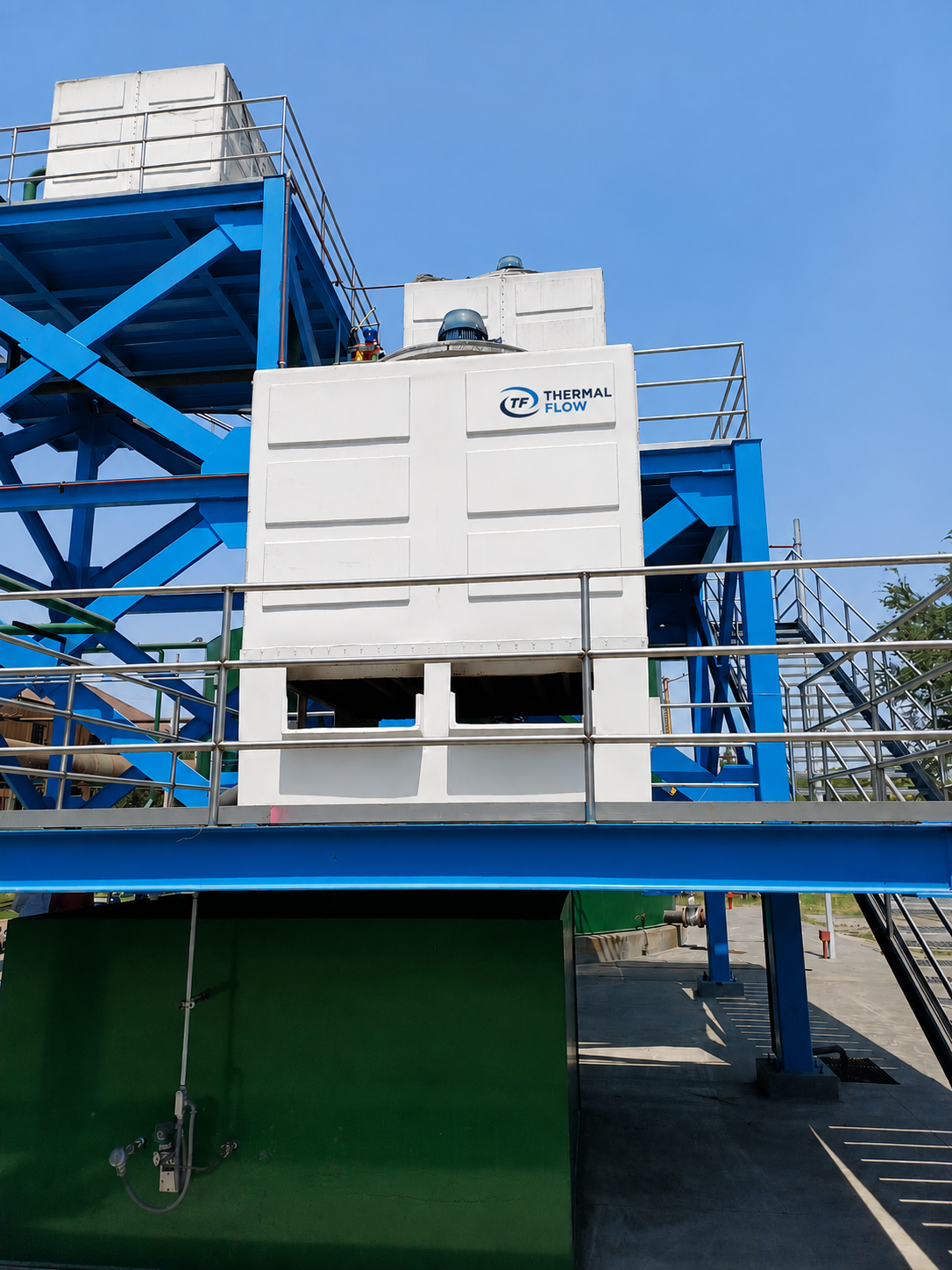
field erected cooling tower systems enable true modularity. Towers can be pre-designed for incremental capacity, expanded on the same footprint, or configured in multiple cells for fault tolerance. Their flexibility matches the rapid provisioning models now standard in the data center sector.
Understand the differences between major configurations with the blog
Cooling Tower Types: Understanding Crossflow, Counterflow, and More . This reference explains how cell layouts and tower architecture influence redundancy and scalability.
Reliability and uptime advantages
Mission-critical IT infrastructure cannot compromise on uptime. Modern
industrial cooling tower solutions are engineered for continuous duty, built to withstand variable weather events, and supported by digital monitoring for predictive fault detection.
- Automated alarms for fan, pump, or water chemistry upsets
- Quick access for rapid repairs and upgrades
- Proven track record supporting 24/7 operations in financial, healthcare, government, and global hyperscale deployments
For maintenance, diagnostics, and long-term risk prevention, visit
Cooling Tower Maintenance: Essential Practices for Optimal Performance for guidance built for high-availability sites.
Water treatment, health, and compliance
High-capacity evaporative towers demand precise water treatment to protect not only thermal efficiency, but also safety and compliance. Monitoring water chemistry, controlling for Legionella risk, preventing scale and biofilm, and ensuring regulatory records all play an essential part in mission-critical cooling strategies.
If you are scaling up your operation or planning a new deployment, always coordinate closely with your
cooling tower manufacturer for integration support, warranty protection, and long-term partnership. Even temporary expansions or campus buildouts can leverage
cooling tower rental systems on tight schedules and ensure quick capacity while permanent infrastructure is completed.
For operators or planners unfamiliar with the principles behind evaporative technology or how water towers outperform alternatives at scale,
What Is a Cooling Tower? Understanding Industrial Cooling Systems provides a foundational overview.
Strategic recommendations for data center owners
Engage tower and water system engineering experts early in the planning phase
- Choose highly flexible, modular systems for future adaptation and rapid provisioning
- Adopt a digital-first approach to
cooling tower maintenance and monitoring
- Validate local climate, water source, and regulatory parameters before specification
To ensure the resilience and efficiency your facility requires, Thermal Flow delivers tailored design, deployment, and support for large-scale
cooling tower programs in data center and technology environments across the USA, Mexico, and Latin America.