Every successful industrial cooling project starts with the right technical details and proven component choices. At
Thermal Flow, as a leading
cooling tower manufacturer, we design and assemble high-performance systems for clients in the USA, Latin America, and demanding global markets. Getting the details right means understanding each cooling tower component, its job, and its measurable impact on productivity and reliability. Here is your practical guide to every element that matters in modern cooling tower engineering.
What are the main components of a cooling tower
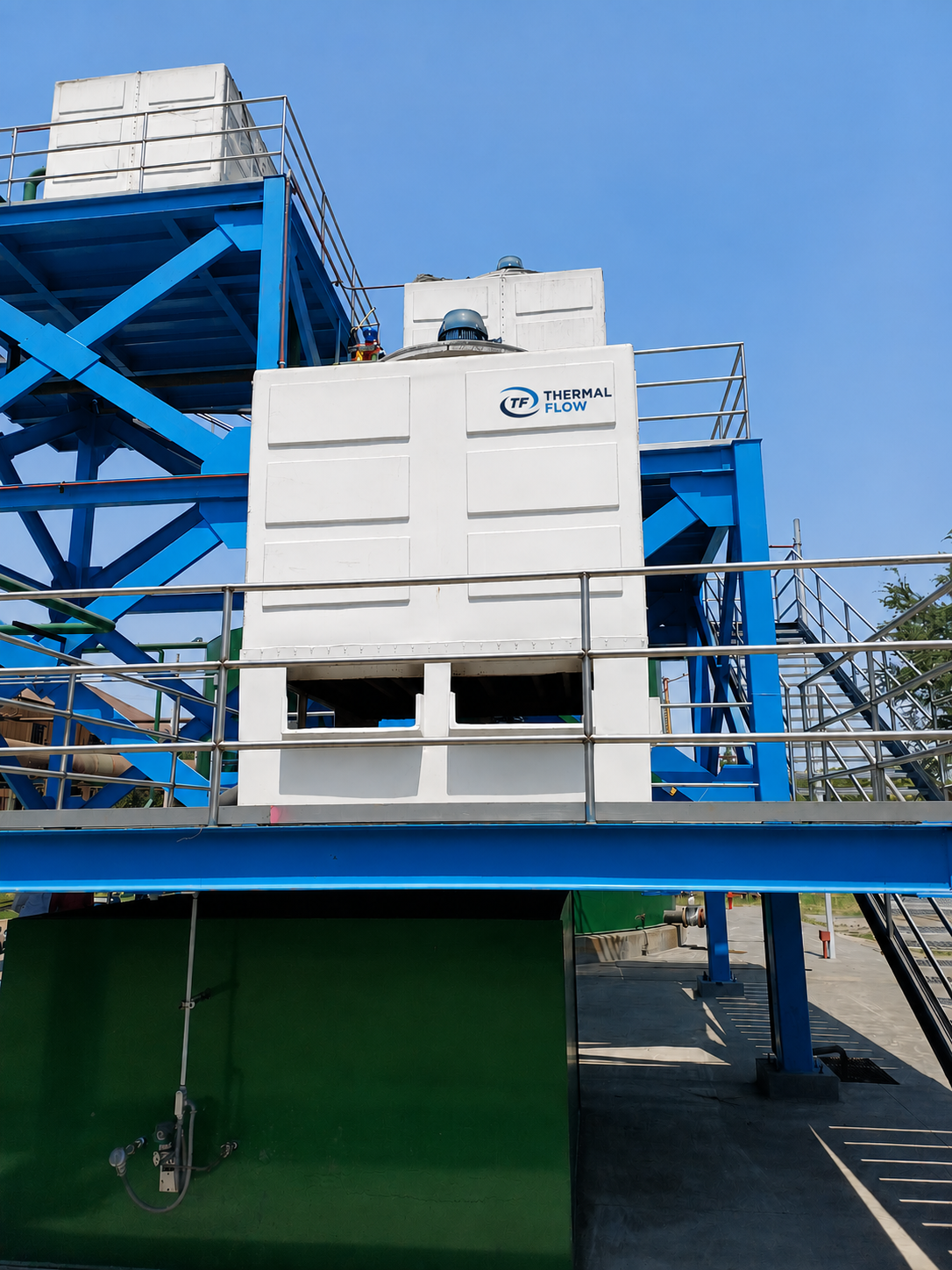
A cooling tower is a complex system, but every successful installation relies on a handful of core components working together for safe, efficient heat rejection. These include fill media, drift eliminators, spray nozzles or water distribution hardware, fans and drive systems, basins, structure, casing, louvers, and control elements. Understanding each part, and how they interact, is key to specifying and maintaining a reliable process cooling system.
Fill media, the heart of heat transfer
Fill media is responsible for creating the maximum surface area contact between water and air, allowing for the rapid transfer of heat through evaporation. Fill comes in different geometries including splash fill for tough water chemistry, and film fill for high-efficiency projects, with each supporting a specific cooling demand. The right fill selection increases the efficiency of an
industrial cooling tower and keeps cold water temperature stable, even under variable plant loads.
Drift eliminators, controlling water and compliance
Drift eliminators capture fine water droplets before they can escape into the environment, reducing visible plume and helping your plant meet air and water quality standards. High-quality drift eliminators protect productivity and prevent regulatory issues related to water loss. Their design, orientation, and materials influence both performance and long-term maintenance requirements.
Spray nozzles and water distribution
Nozzles are the precision hardware that evenly distributes hot process water across the fill. Effective water distribution ensures every part of the fill media is active, supporting stable evaporative cooling and preventing dry spots that can reduce performance. Failed or clogged nozzles, often caused by suspended solids or scale, are a leading source of performance decline in process environments.
Fans and drive systems
Fans are responsible for moving air through the tower—either by forcing it in or pulling it out—ensuring continuous contact with the wetted fill. Choices between axial and centrifugal fans, along with gearbox, belt, or direct drive systems, all change both operating cost and maintenance routines in an
industrial cooling tower. Proper alignment and sizing deliver stable air flow and process accuracy plant-wide.
Basins, cold and hot sections
Basins collect cooled water ready to return to process. Cold water basins must resist corrosion, allow easy sediment removal, and provide capacity for surges. Hot water basins at the tower top are critical for even initial distribution. Proper basin maintenance supports stable pump operation, prevents clogging, and protects every system downstream of the tower itself.
Casing, structure and support systems
The casing gives shape and physical strength to every cooling tower, protecting internal components from environmental stress. Material choices range from fiberglass to stainless steel, each selected for site-specific corrosion resistance and structural demands. Properly engineered structural components extend the lifecycle of your equipment and provide safe access for service teams.
Louvers, valves and auxiliary mechanicals
Louvers control the volume and direction of incoming air, improve water containment, and help manage water splash-out and drift. Additional auxiliary valves and make-up water controls protect process water chemistry and let you fine-tune site performance. These details, often overlooked, contribute to quieter, safer, and more productive tower operation.
How all cooling tower components work together
The process begins when hot process water enters through precision nozzles, flowing evenly onto the fill. Air moves through or across this wetted fill, powered by fans, maximizing contact. As heat is removed by evaporation, cooled water collects in the basin, ready for recirculation. Each component, from drift eliminator to louver, actively supports this high-efficiency, closed-loop cycle, turning equipment into a strategic productivity asset for any plant.
Why proper component selection protects system performance
Individual performance and long-term reliability depend on fit-for-purpose component selection and configuration. Industrial processes, water chemistry, and climate all affect what fill, fan, and casing choices will deliver the most stable, cost-effective results. A systematic approach delivers the right balance of price, maintenance, and plant reliability.
Maintenance essentials for every cooling tower component
Each core part of the tower needs specific attention. Fill needs regular cleaning to remove scale or debris, drift eliminators must be checked for cracks and secure fit, nozzles require inspection for clogging or wear, and fan drives need routine alignment and vibration monitoring. Basin surfaces should be drained and scrubbed on a schedule. For a complete breakdown of best practices and modern industrial requirements, see
Cooling Tower Maintenance: Essential Practices for Optimal Performance, your technical reference for risk prevention and plant safety.
What happens if a cooling tower component fails in industry
Component failure immediately threatens operation. A blocked nozzle or collapsed fill will reduce cooling capacity, risk hot returns, and may lead to unscheduled shutdowns. Fan or drift eliminator failure increases noise, water loss, and possible non-compliance. Ignoring small component issues accelerates wear and raises total cost, while systematic inspection of each
industrial cooling tower element avoids crisis events.
Request technical recommendations for your next industrial cooling tower
The performance of your plant’s cooling is only as reliable as its components and the expertise behind them. For technical evaluation, engineering support, and tailored upgrades to any
industrial cooling tower, connect with the team at
Thermal Flow.