Selecting the right cooling tower type is a critical engineering step for any industrial facility. Thermal performance, maintenance needs, plant footprint, and process risk all depend on getting this first decision right. Industrial buyers and plant engineers across the US, Mexico, and Latin America work withThermal Flow,
cooling tower manufacturer, to ensure that tower type, application, and specification are fully aligned from day one.
Overview of industrial cooling tower types
All industrial cooling towers fall into key categories based on airflow direction, mechanical draft method, and construction. The most common types in process industries are crossflow and counterflow, with additional splits for induced draft, forced draft, and natural draft towers. For large industrial projects and continuous plants, the choice among these directly affects water treatment design, mechanical reliability, energy use, and maintenance staffing.
Crossflow vs counterflow cooling towers
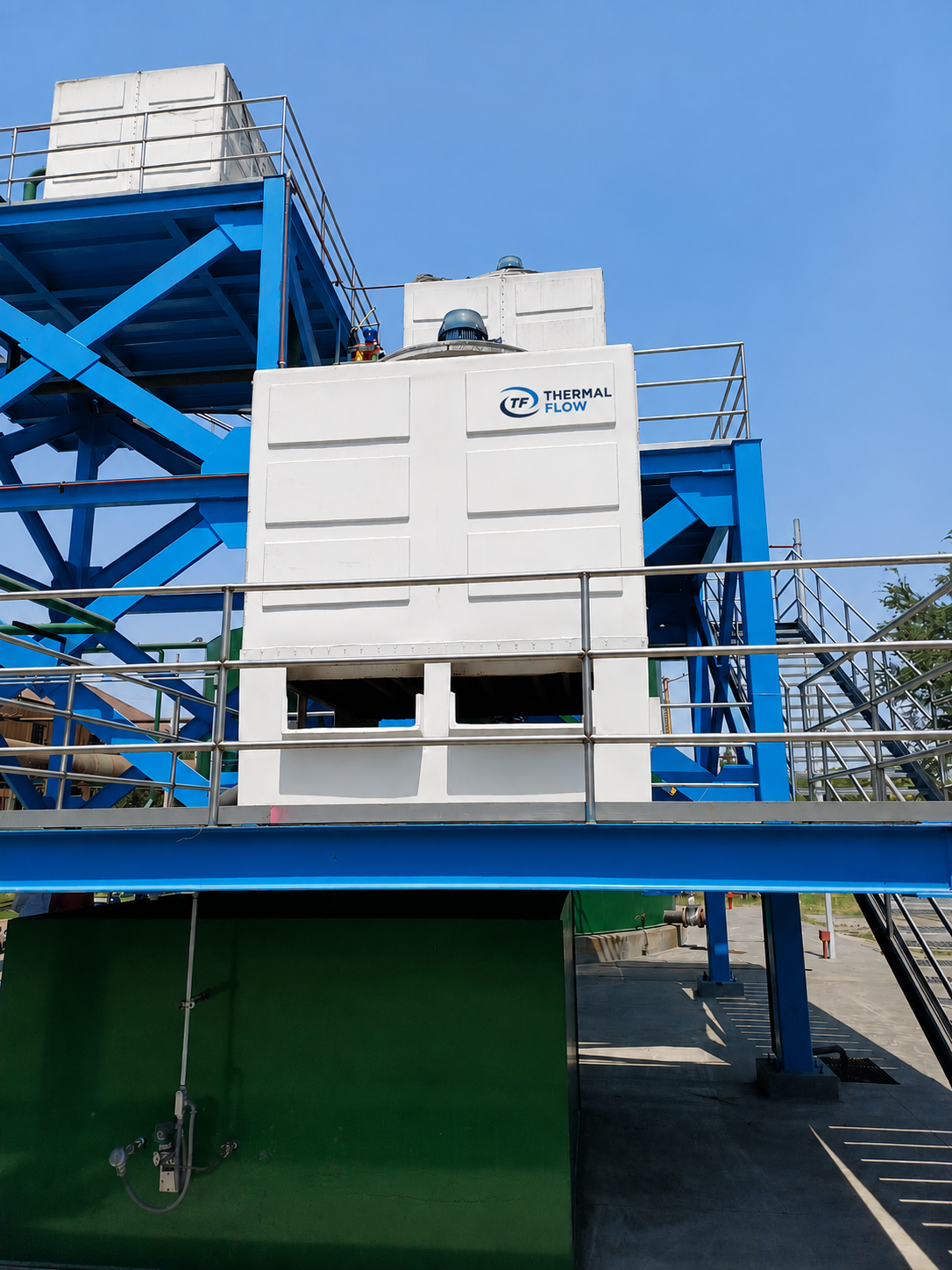
One of the most important engineering distinctions is between crossflow and counterflow tower designs, and this decision impacts mechanical risk and thermal output from commissioning through the full equipment lifecycle. In a crossflow cooling tower, air flows horizontally across the falling process water, distributing it through open fill media. This pattern allows very easy internal access, which is why crossflow systems are often favored where visual inspections and frequent servicing are required.
What is a crossflow cooling tower?
Crossflow towers are valued for their ease of maintenance, use of open hot water basins, and tolerance to changing influent water quality. In plants where process cycles are variable, and rapid cleaning is a must, this straightforward access makes a real difference. If your site is comparing crossflow and counterflow, and wants practical criteria on selection, review
Crossflow vs Counterflow Cooling Towers: Which Design Is Right for You? for an application-specific analysis.
How does a counterflow cooling tower work?
A counterflow cooling tower draws air directly upward, through fill, against the downward flow of water. This arrangement increases surface contact, driving higher energy efficiency and compact design. Plants limited on space or those needing maximum heat rejection per footprint often use this configuration. However, because the cold water basin is enclosed, counterflow towers are not as easily inspected or cleaned, so maintenance planning is critical.
Key advantages and disadvantages
Crossflow delivers serviceability, straightforward distribution, and lower head requirements for pumps, while counterflow brings thermal efficiency and smaller layouts, but can increase cleaning labor and sensitivity to blockages. Understanding this tradeoff is central when planning any major
industrial cooling tower installation or expansion.
Induced draft, forced draft, and natural draft cooling towers
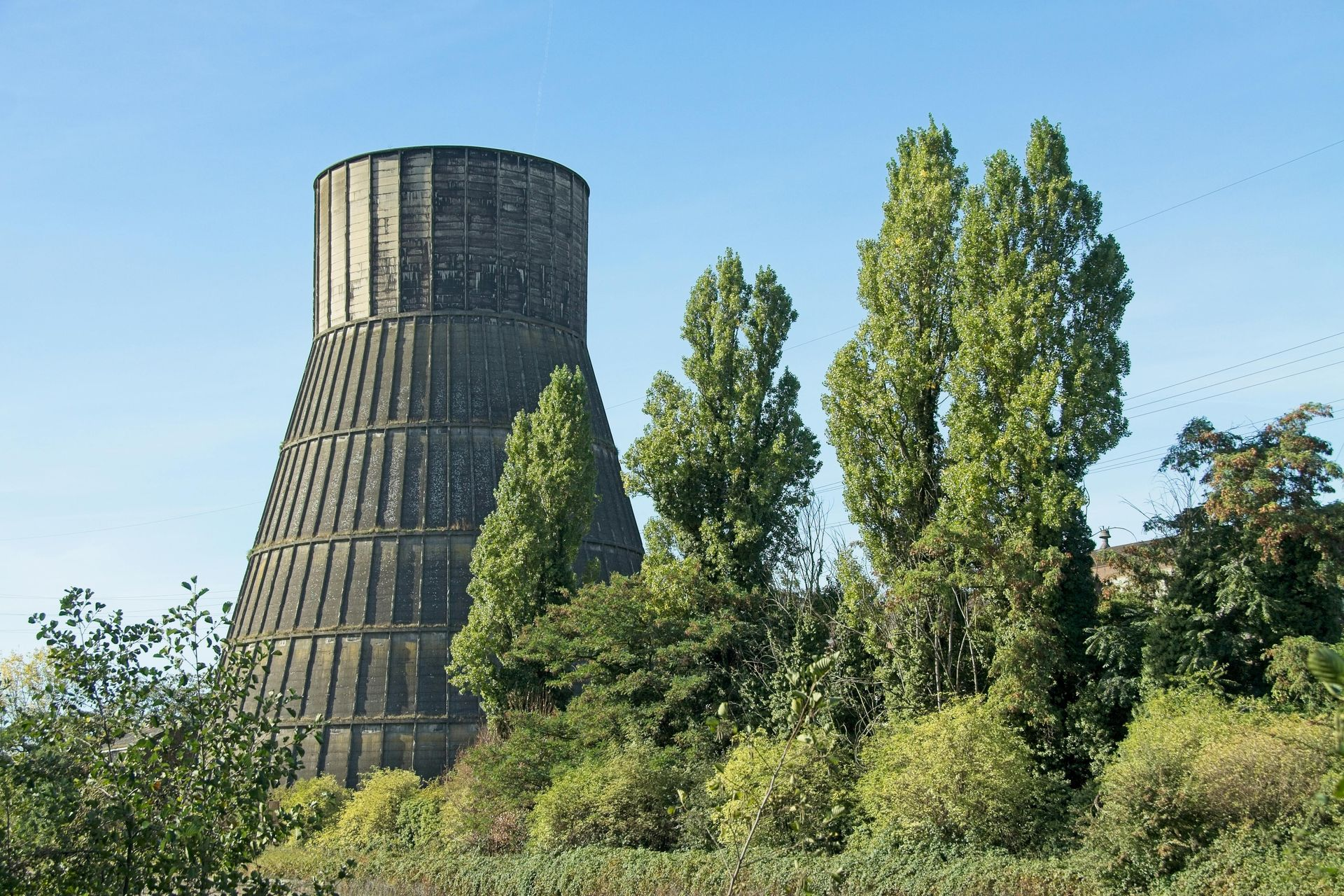
Air movement sets the boundary for cooling performance. Induced draft towers place high-efficiency fans at the discharge, pulling air through the fill and exhausting it upwards. This setup gives you control over airflow, plume management, and tower noise on process-driven industrial sites. Forced draft towers push air laterally from the base, which works well for some modular projects but may deliver lower energy efficiency over time. Natural draft towers, by contrast, depend on buoyancy and a tall chimney structure to move large volumes of air. They are suited only for ultra-large plants such as major power stations, due to their size and siting requirements.
Most modern industrial projects, from steel to chemical to data infrastructure, now deploy induced draft towers for long-term flexibility, lower maintenance risk, and ease of integration.
Package vs field-erected cooling towers and specialized configurations
Another pivotal choice is between package towers, shipped as modular prefabricated units, and field-erected towers built custom on site. Package units provide a rapid, scalable solution for projects with urgent timelines or moderate cooling needs. Field-erected towers are required for high-tonnage central plants, severe loads, or any site demanding tailored engineering and materials selection. Project managers should choose based on scale, water quality challenges, available space, and regulatory risk.
How to choose the right cooling tower type for industrial applications
The best method is a systematic process review: define exact heat rejection needs, evaluate water quality and source, check the real climate exposure, and balance installation footprint against maintenance access and lifecycle cost. It’s crucial to include permitting and environmental standards, since plume, water discharge, and even tower sound can affect compliance. Don’t rely on catalog specs alone, use simulation data, comparative site history, and consult directly with a proven
industrial cooling tower partner for configuration, project delivery, and support.
Get expert guidance on engineering your industrial cooling tower specification
Whether you are planning an upgrade, expansion, or new deployment,Thermal Flow helps operators and engineers benchmark, select, and configure cooling towers for maximum efficiency and regulatory certainty. To set up a technical review, clarify design tradeoffs, or build a business case for management or investment, book your consultation for an industrial cooling tower.